The Death of Marcus Aurelius

The Death of Marcus Aurelius
Showing posts with label John Martin. Show all posts

Monday, July 25, 2022

The Last Judgement Triptych


As a reference for Thomas a Kempis, The Imitation of Christ 3.48: 

John Martin, The Plains of Heaven / The Last Judgement / The Great Day of His Wrath (1851-1853) 


—The three pieces were meant to go together something like this: 


Thomas a Kempis, The Imitation of Christ 3.48


Of the day of eternity and of the straitnesses of this life 

1. Oh most blessed mansion of the City which is above! Oh most clear day of eternity which the night obscures not, but the Supreme Truth ever enlightens! Day always joyful, always secure and never changing its state into those which are contrary. Oh would that this day might shine forth, and that all these temporal things would come to an end. It shines indeed upon the Saints, glowing with unending brightness, but only from afar and through a glass, upon those who are pilgrims on the earth. 

2. The citizens of heaven know how glorious that day is; the exiled sons of Eve groan, because this is bitter and wearisome. The days of this life are few and evil, full of sorrows and straits, where man is defiled with many sins, ensnared with many passions, bound fast with many fears, wearied with many cares, distracted with many questionings, entangled with many vanities, compassed about with many errors, worn away with many labors, weighed down with temptations, enervated by pleasures, tormented by poverty. 

3. Oh when shall there be an end of these evils? When shall I be delivered from the wretched slavery of my sins? When shall I be mindful, O Lord, of You alone? When shall I rejoice in You to the full? When shall I be in true liberty without any impediment, without any burden on mind or body? When shall there be solid peace, peace immovable and secure, peace within and without, peace firm on every side? Blessed Jesus, when shall I stand to behold You? When shall I gaze upon the glory of Your kingdom? When shall You be to me all in all? Oh when shall I be with You in Your Kingdom which You have prepared from the foundation of the world for them that love You? I am left destitute, an exile in a hostile land, where are daily wars and grievous misfortunes. 

4. Console my exile, mitigate my sorrow, for towards You all my desire longs. For all is to me a burden, whatsoever this world offers for consolation. I yearn to enjoy You intimately, but I cannot attain unto it. I long to cleave to heavenly things, but temporal things and unmortified passions press me down. In my mind I would be above all things, but in my flesh I am unwillingly compelled to be beneath them. So, wretched man that I am, I fight with myself, and am made grievous even unto myself, while the spirit seeks to be above and the flesh to be beneath. 

5. Oh how I suffer inwardly, while with the mind I discourse on heavenly things, and presently a crowd of carnal things rush upon me while I pray. My God, be not You far from me, nor depart in wrath from Your servant. Cast forth Your lightning and scatter them; send out Your arrows, and let all delusions of my enemy be confounded. Recall my senses unto Yourself, cause me to forget all worldly things; grant me quickly to cast away and despise the imaginations of sin. Succour me, O Eternal Truth, that no vanity may move me. Come unto me, O Heavenly Sweetness, and let all impurity flee from before Your face. Pardon me also, and of Your mercy deal gently with me, whensoever in prayer I think on anything besides You; for truly I confess that I am wont to be continually distracted. For often and often, where in the body I stand or sit, there I myself am not; but rather am I there, whither I am borne by my thoughts. Where my thought is, there am I; and there commonly is my thought where that which I love is. That readily occurs to me, which naturally delights, or pleases through custom. 

6. Wherefore You, who are the Truth, has plainly said, where your treasure is, there will your heart be also. If I love heaven, I gladly meditate on heavenly things. If I love the world, I rejoice in the delights of the world, and am made sorry by its adversities. If I love the flesh, I am continually imagining the things which belong to the flesh; if I love the spirit, I am delighted by meditating on spiritual things. For whatsoever things I love, on these I readily converse and listen, and carry home with me the images of them. But blessed is that man who for Your sake, O Lord, is willing to part from all creatures; who does violence to his fleshly nature and crucifies the lusts of the flesh by the fervor of his spirit, so that with serene conscience he may offer unto You a pure prayer, and be made worthy to enter into the angelic choirs, having shut out from himself, both outwardly and inwardly, all worldly things. 

IMAGE: John Martin, The City of God and the Waters of Life (c. 1851) 


Saturday, April 2, 2022

Stoic Snippets 135


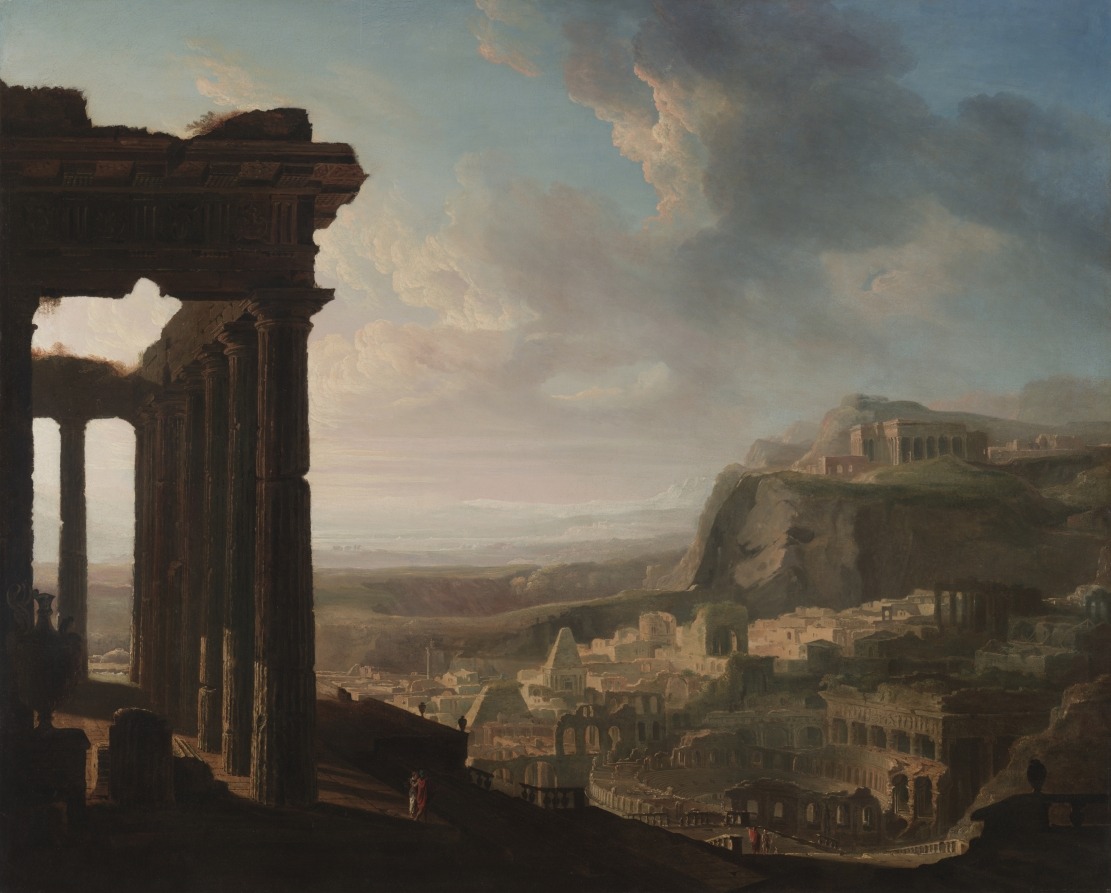
Consider the past—such great changes of political supremacies; you may foresee also the things which will be. 

For they will certainly be of like form, and it is not possible that they should deviate from the order of the things which take place now. 

Accordingly to have contemplated human life for forty years is the same as to have contemplated it for ten thousand years. 

For what more will you see? 

—Marcus Aurelius, Meditations 7.49 

IMAGE: John Martin, Ruins of an Ancient City (c. 1810) 


Wednesday, February 9, 2022

Epictetus, Golden Sayings 151


God has made all things in the world, nay, the world itself, free from hindrance and perfect, and its parts for the use of the whole. 

No other creature is capable of comprehending His administration thereof; but the reasonable being Man possesses faculties for the consideration of all these things—not only that he is himself a part, but what part he is, and how it is fitting that the parts should give place to the whole. 

Nor is this all. Being naturally constituted noble, magnanimous, and free, he sees that the things which surround him are of two kinds. Some are free from hindrance and in the power of the will. Other are subject to hindrance, and depend on the will of other men. 

If then he places his own good, his own best interest, only in that which is free from hindrance and in his power, he will be free, tranquil, happy, unharmed, noble-hearted, and pious; giving thanks to all things unto God, finding fault with nothing that comes to pass, laying no charge against anything. 

Whereas if he places his good in outward things, depending not on the will, he must perforce be subject to hindrance and restraint, the slave of those that have power over the things he desires and fears; he must perforce be impious, as deeming himself injured at the hands of God; he must be unjust, as ever prone to claim more than his due; he must perforce be of a mean and abject spirit. 

IMAGE: John Martin, The Creation of Light (1824)


Thursday, July 15, 2021

The Wisdom of Solomon 10:6-8


[6] Wisdom rescued a righteous man when the ungodly were perishing;
he escaped the fire that descended on the Five Cities.
[7] Evidence of their wickedness still remains:
a continually smoking wasteland,
plants bearing fruit that does not ripen,
and a pillar of salt standing as a monument
to an unbelieving soul.
[8] For because they passed wisdom by,
they not only were hindered from recognizing the good,
but also left for mankind a reminder of their folly,
so that their failures could never go unnoticed.


IMAGE: John Martin, The Destruction of Sodom and Gomorrah (1852)


Saturday, July 18, 2020

Monday, June 29, 2020

Epictetus, Golden Sayings 123


Shall we never wean ourselves—shall we never heed the teachings of Philosophy (unless perchance they have been sounding in our ears like an enchanter's drone):

This World is one great City, and one is the substance whereof it is fashioned. A certain period indeed there needs must be, while these give place to those; some must perish for others to succeed; some move and some abide. Yet all is full of friends—first God, then Men, whom Nature has bound by ties of kindred each to each.

IMAGE: John Martin, The City of God (1851)


Tuesday, June 9, 2020

Seneca, On Peace of Mind 11.4


For by looking forward to everything that can happen as though it would happen to him, he takes the sting out of all evils, which can make no difference to those who expect it and are prepared to meet it. Evil only comes hard upon those who have lived without giving it a thought and whose attention has been exclusively directed to happiness.

Disease, captivity, disaster, conflagration, are none of them unexpected: I always knew with what disorderly company Nature had associated me.

The dead have often been wailed for in my neighborhood. The torch and taper have often been borne past my door before the bier of one who has died before his time. The crash of falling buildings has often resounded by my side. Night has snatched away many of those with whom I have become intimate in the forum, the Senate-house, and in society, and has sundered the hands which were joined in friendship.

People like to argue about nature vs nurture, as if who we are is made by either what we were born with or what others do to us. It is a false dichotomy to begin with, as both will equally influence us.

It is also beside the point, since such conditions are only material causes. Our own free choices, informed by our own judgments, are the efficient causes.

In a similar manner, people like to argue whether the glass is half full or half empty. They say that some people expect the best, and that other people expect the worst, and that our initial attitudes will determine how we interpret things.

They are quite right in one sense. The glass is, of course, just a glass, and it so happens to have within it some water. Whether that glass, however, contains more than I want or less than I want depends on my estimation. If it is filled to the half, it filled to the half; anything else speaks to my own desires.

They are quite wrong in another sense. Is it not possible to simply say that being filled to the half is neither better nor worse? Can I not be indifferent to the glass and to the water? It is what it is, and I am what I am. It is a mistake to confuse the two.

So it also is when folks try to tell me that Stoics are too negative, and they always expect the worst. No, a Stoic is open to expecting anything at all, and he won’t call it “worse” or “better” until he has had the chance to make something of it.

Does he accept that he could, like Job, lose all his property, and his health, and his loved ones, within a single moment? Yes, he does, but not because he is a pessimist. He knows that it may come, and so he is prepared for it to come.

Does he accept that he could, like Job once again, win back all of his property, and his health, and his loved ones, within a single moment? Yes, he does, but not because he is an optimist. He knows that it may come, and so he is prepared for it to come.

“Good” or “bad” are not determined by the scope of our conditions, and that is the root of our misunderstanding. Expect neither good nor bad, because the conditions are in themselves never good or bad; we are either good or bad.

I am quite ready, of course, to be open to the possibility of wealth and fame. My problem is that I crave such things because I think they will make me happy. I am not at all ready to be open to the possibility of poverty and disrepute. My problem is that I avoid such things because I think they will make me unhappy.

It never seems to occur to me that it has nothing to do with what I was born with, or what has happened to me. It never seems to occur to me that the only thing “full” or “empty” is the quality of my own soul.

With apologies to Roy Batty, I have seen things you wouldn’t believe. Some have lifted me up to the highest highs, and some have dragged me down to the lowest lows. I am learning to become accustomed to them all, knowing that I should expect them all. They should neither elevate me nor lower me, since they do not make me.

Seneca speaks here of what we consider to be the lows, I suspect, because we fear them so very much. There is no need to fear what we know must be.

Written in 11/2011

IMAGE: John Martin, The Seventh Plague (1823)